
Indian benchmark indices Sensex and Nifty recorded their third consecutive day of gains, primarily driven by an over 8 per cent surge in Bajaj Finance following strong Q1 FY27 results, coupled with significant foreign fund inflows and a dip in crude oil prices.

Indian benchmark indices Sensex and Nifty saw a significant rebound in early trade, driven by a sharp decline in crude oil prices and easing geopolitical tensions in the West Asia, which improved market sentiment and reduced inflation fears. Track Sensex, Nifty on July 27.

Foreign investors have largely been exiting one part of the market while domestic investors have been enthusiastically accumulating another, points out Debashis Basu.

The government on Friday opened up the country's stock exchanges for foreign investment, with a cap of 49 per cent.

'The market is currently neither cheap enough to be exciting about nor expensive enough to worry about.'

Shiprocket plans to allocate a significant portion of its IPO proceeds towards artificial intelligence (AI), aiming to evolve its e-commerce enablement platform into a comprehensive operating system for merchants, enabling conversational commands and reducing manual tasks.

Foreign Portfolio Investors (FPIs) withdrew Rs 49,340 crore (USD 5.16 billion) from Indian equities in June, driven by global risk aversion, a preference for developed markets, soaring US bond yields, and stretched domestic valuations, bringing total withdrawals to Rs 2.7 lakh crore so far in 2026.

Foreign Currency Non-Resident (Bank), or FCNR (B), deposits mobilised under the Reserve Bank of India's (RBI's) concessional swap facility may have already surpassed the amount raised during the 2013 scheme in just about 45 days, prompting SBI Research to sharply raise its estimate for inflows under the facility to $65-70 billion.

Larger NGOs could no longer work with smaller ones, especially those organisations working on the ground that had no means of or expertise in raising money themselves, reveals Aakar Patel.

Foreign investment firms, especially private equity, are jittery about the Indian market as uncertainty continues to shroud the energy sector.

Trade negotiations between the United States and Canada have collapsed, leading to the US imposing 50% tariffs on nearly $28 billion worth of Canadian imports, with Canada immediately vowing to retaliate dollar-for-dollar.

Making UPI payments fee-based for some transactions could enhance mental reservations against digital payments -- which have largely been overcome -- once more. Do we want to regress?, asks R Jagannthan.

Domestic institutional investors (DIIs), driven by the popularity of mutual funds, have emerged as significant stabilising forces for Indian capital markets amidst global volatility and foreign portfolio investment (FPI) outflows, according to Sebi whole-time member Amarjeet Singh.

The Nifty and Sensex outperformed Asian peers in South Korea, Japan, Taiwan and China.

A think tank, GTRI, has urged India to resist US pressure regarding its UPI policies, advocating for the defence of competition, policy autonomy, and the long-term sustainability of its payments ecosystem. This comes as the Lok Sabha passed a bill allowing charges on UPI transactions, a move GTRI suggests should not be influenced by foreign trade complaints.

Net inflows into smallcap funds surged 39 per cent M-o-M to a record Rs 7,768 crore, while midcap fund inflows rose marginally to Rs 6,192 crore.

'The prime minister has given us the task of taking at least 300 satellites to orbit in the next five to six years.'

Indian benchmark equity indices, Sensex and Nifty, extended their decline for a second consecutive day, primarily due to elevated crude oil prices and selling pressure on Tata Group stocks following Tata Sons Chairman N Chandrasekaran's announcement that he will not seek reappointment.

Indian benchmark indices, Sensex and Nifty, closed lower, primarily due to a downturn in banking and financial stocks, coupled with crude oil prices remaining above USD 80 per barrel. Geopolitical uncertainties and new regulatory proposals for the non-bank lending sector also contributed to cautious investor sentiment.

'Once you're wrestling with making a merger of that scale value-accretive, you're also under pressure to keep growing the balance sheet and chasing liabilities, and other things start to slip as a consequence.'

Indian benchmark indices Sensex and Nifty experienced a significant decline in early trade, with the Sensex falling over 500 points and the Nifty over 150 points, as Brent crude oil prices surged past USD 100 per barrel due to escalating geopolitical tensions in the West Asia. track sensex, Nifty on July 24.

Russia on Monday assured India of uninterrupted supply of energy and fertilisers amid disruption caused by the West Asia crisis, as External Affairs Minister S Jaishankar met President Vladimir Putin in Moscow and held talks with his key interlocutors.

it was done following the government's approval to increase foreign investment limit in the bank to 62 per cent from 49 per cent.

S Mahendra Dev, chairman of the Economic Advisory Council to the Prime Minister, expressed confidence that the rupee would stabilise around the 92-93 level against the US dollar, despite geopolitical tensions, and that foreign investment flows would return.

The Indian equity market is set for an event-heavy week, with analysts pointing to the Reserve Bank of India's (RBI) interest rate decision, developments in the US-Iran situation, and crude oil prices as the primary determinants of market trends.

Cleaner balance sheets, regulatory support and strong growth prospects helped Indian private banks attract over $6 billion in foreign capital, with more deals expected in 2026.

West Bengal's BJP government, led by Chief Minister Suvendu Adhikari, has announced a probe into the expenditure of the Bengal Global Business Summit (BGBS) organised during the previous TMC regime. Adhikari alleged that an event management firm was paid Rs 635 crore for various editions of the summit, promising strict action against those found responsible for financial irregularities.

Not a single retail outlet ran dry. Every household that wanted a cylinder got one. India faced neither a 1991 moment nor a 2013 one. Macroeconomic stability held. This was not an accident, and it was not luck alone. It was the work of a government that chose to act as it had during the pandemic -- deliberately and gradually, building one measure upon another rather than reaching for a single dramatic lever, explains V Anantha Nageswaran, chief economic advisor to the Government of India.
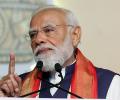
Prime Minister Narendra Modi has urged for restraint in the use of petro products due to the West Asia crisis, emphasising the need to save foreign exchange and reduce the impact of war. He also highlighted India's progress in solar power and ethanol blending, while assuring support to Telangana's development.

The Delhi High Court has quashed cases registered by the Delhi Police and the Enforcement Directorate against news portal NewsClick and its editor-in-chief Prabir Purkayastha, citing that the continuation of the FIR was 'a gross abuse of the process of law' and the investment was an economic decision that 'did not spell out any criminal offence'.

Indian benchmark indices, Sensex and Nifty, closed lower due to significant selling in HDFC Bank and Axis Bank shares, driven by margin-related concerns and escalating US-Iran tensions, which also pushed crude oil prices higher.

Opens operations in high-speed train, freight and suburban corridors to private sector

Indian benchmark indices Sensex and Nifty closed lower for the second consecutive day, driven by investor caution over conflicting geopolitical signals from West Asia and fresh foreign institutional investor (FII) outflows.

India's gold demand saw a 6 per cent year-on-year decline in the April-June quarter of 2026, reaching 131.4 tonnes, primarily due to subdued seasonal sales, increased Customs duty, and Prime Minister Narendra Modi's call to reduce gold purchases, according to a World Gold Council report.
A Parliamentary Standing Committee on Commerce has urged the Indian government to swiftly conclude the proposed India-US Bilateral Trade Agreement (BTA), while ensuring India's interests are protected, recommending complete exemption for key export products like generic medicines and smartphones from future US tariff increases.

The Indian government has issued an updated Standard Operating Procedure (SOP) for processing Foreign Direct Investment (FDI) applications, aiming to clear all proposals within 12 weeks, a two-week extension from the previous 10-week target, to ensure a fully paperless and transparent process.

These new provisions are expected to help heirs access securities faster.

Delhi Police have arrested two men in connection with separate cyber investment fraud cases involving over Rs 74 lakh. The accused were involved in luring victims into investing in fake stock trading and IPO platforms.

Long-duration bonds allow investors to match investment tenure with long-term liabilities and also stabilise their long-duration portfolios.
Indian benchmark indices, Sensex and Nifty, recorded their fifth consecutive day of losses, driven by investor caution over rising oil prices due to West Asia tensions and renewed concerns regarding US trade tariffs.
